Booking choice: The dome and museum tour, from $136 per person. Check dates Tour details
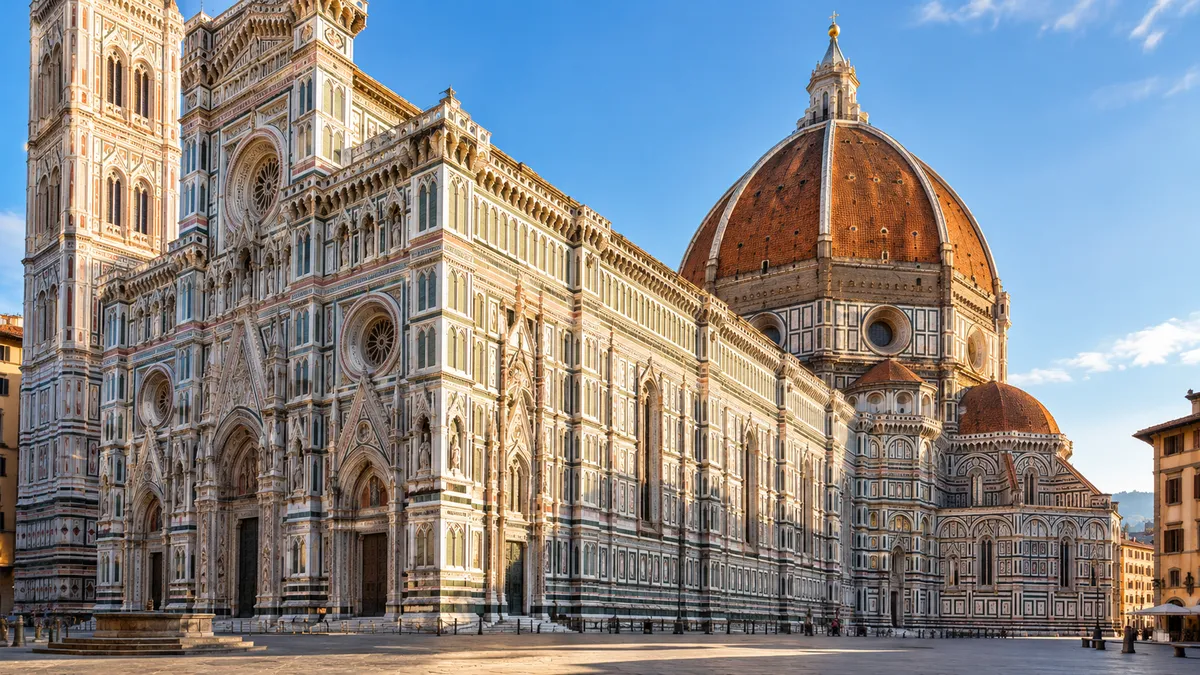
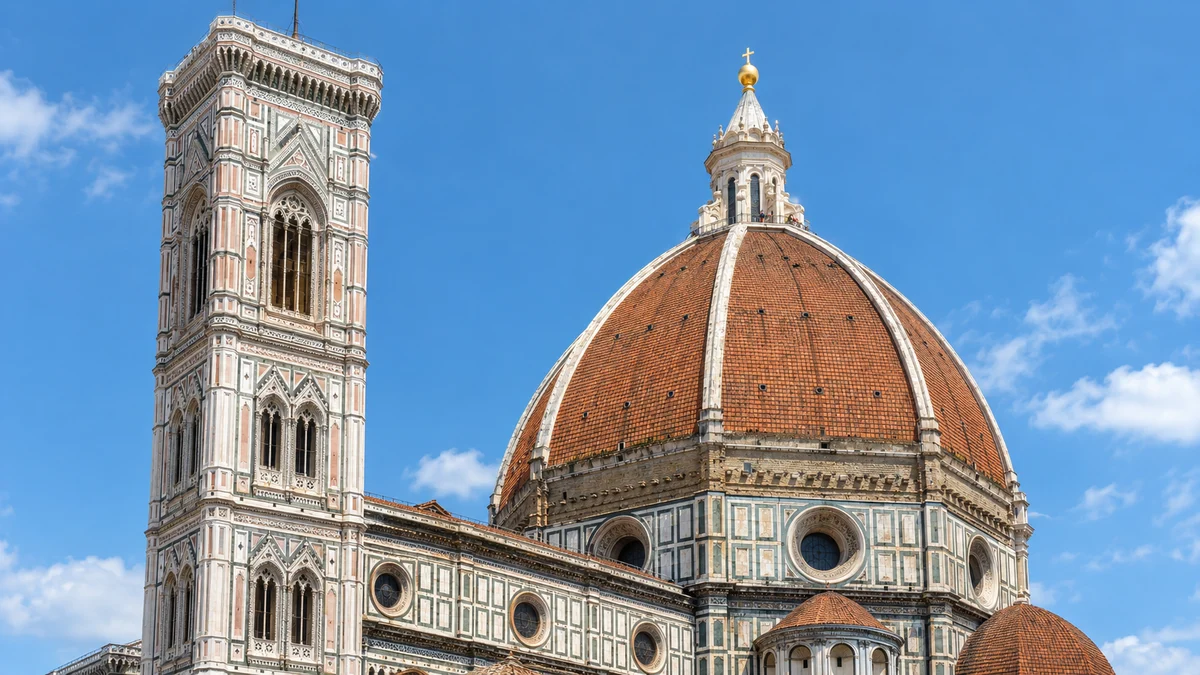
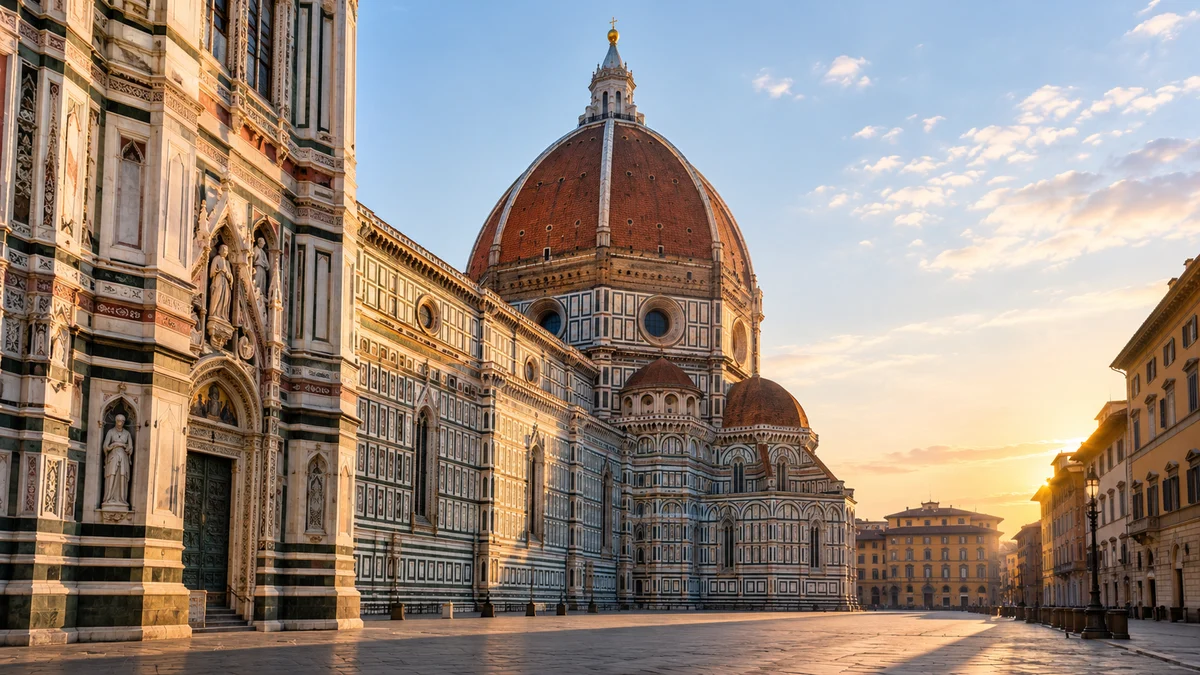
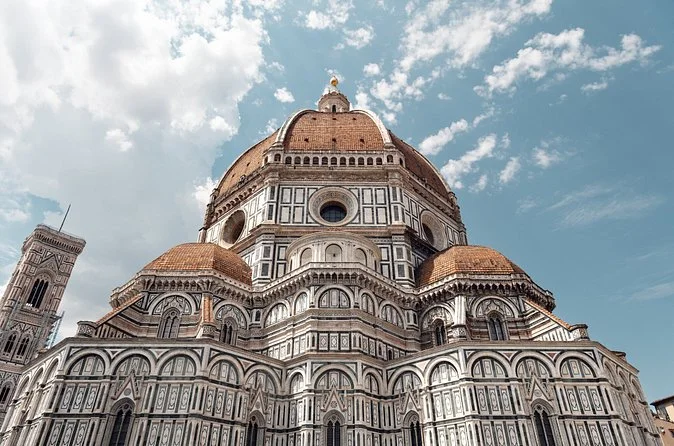
Brunelleschi's dome went up between 1420 and 1436 without a full wooden frame underneath it, built as two shells, one inside the other (Opera history). The climb follows the passages the builders left between them. They were made for workmen, not for visitors, and it shows.
This guide takes the route stage by stage, with the timings the Opera gives, the rules on bags and health, and the slots that keep the stairs quiet. All of it applies whether you climb on the €30 pass or with a tour.
The quick answer
463 steps, no lift, about 45 minutes from your slot to the end of the visit. You climb stairs inside the walls, walk a gallery 40 metres above the cathedral floor right under the Last Judgment fresco, then squeeze up between the two shells to the open terrace at the lantern. It is steep and narrow, not dangerous. Leave the backpack in the free cloakroom, wear flat shoes, and take the 8:15 slot on a weekday.
How many steps are there to the top of Brunelleschi's dome?
463 steps, and there is no lift. You enter through the Porta della Mandorla on the north side of the cathedral.
The Opera gives the figure on its visitor rules page. Steps vary: some are wide stone treads, some shallow, some cut steep into the curve of the shell. The dome stands about 116 metres to the top of the lantern, by the Opera's count, with an outside diameter of nearly 55 metres. You stop just under the lantern, on the terrace that rings its base.
For a sense of scale, Giotto's Bell Tower next door is 414 steps. If you plan to climb both, read dome or bell tower first.
What is the route, stage by stage?
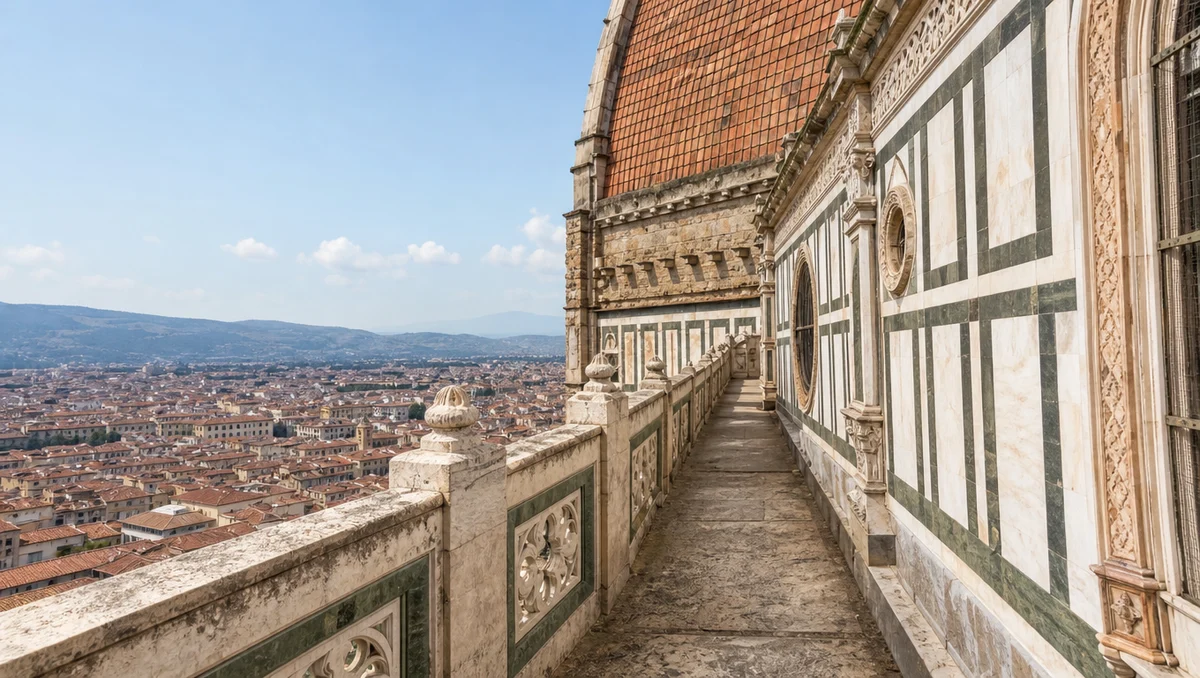
Four stages: stairs inside the walls, the gallery under the fresco, the passage between the shells, then the terrace at the lantern.
Here is the climb as the Opera and guides such as Visit Florence describe it:
| Stage | What it is | What it feels like |
|---|---|---|
| 1. Up the walls | Stone stairs and corridors inside the cathedral's structure, up to the drum | Regular stairs, a few small rooms, cool air |
| 2. The gallery | A walkway round the base of the dome, about 40 m above the floor | The fresco above you, the nave far below, behind plexiglass |
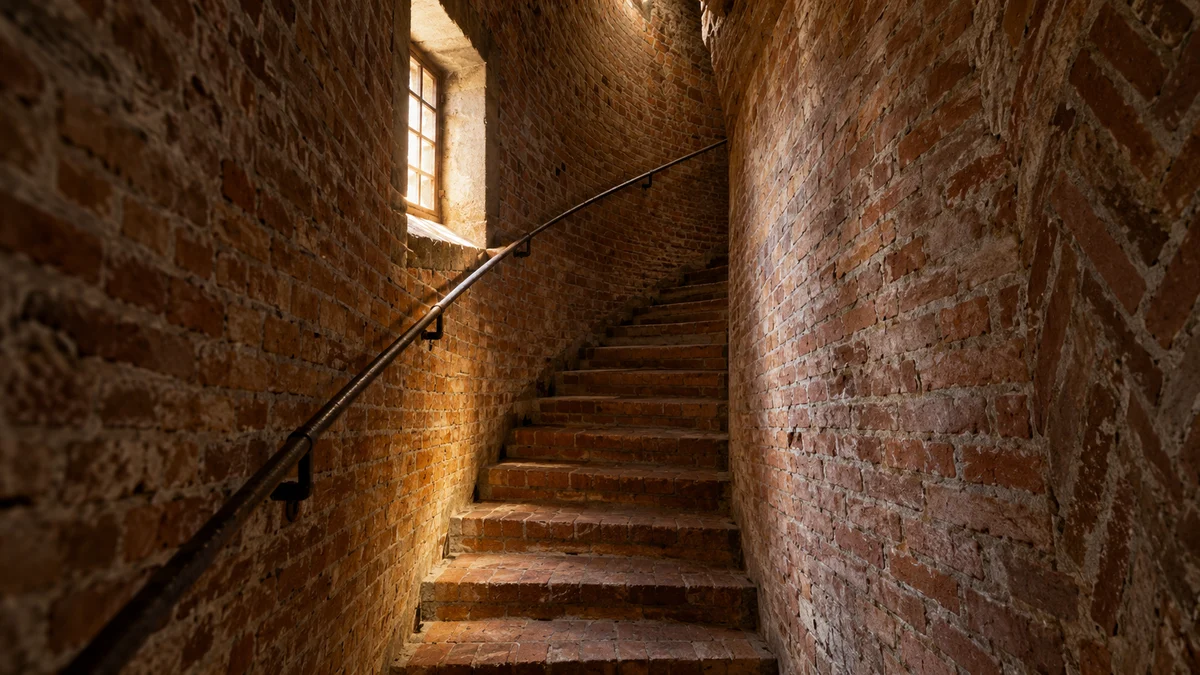
| 3. Between the shells | Steep, curving stairs between the inner and outer dome, under 1 m wide in places | Single file, the walls lean in, the herringbone brickwork is right by your hand |
| 4. The lantern terrace | An open terrace at the foot of the lantern | Wind, sky and Florence on every side |
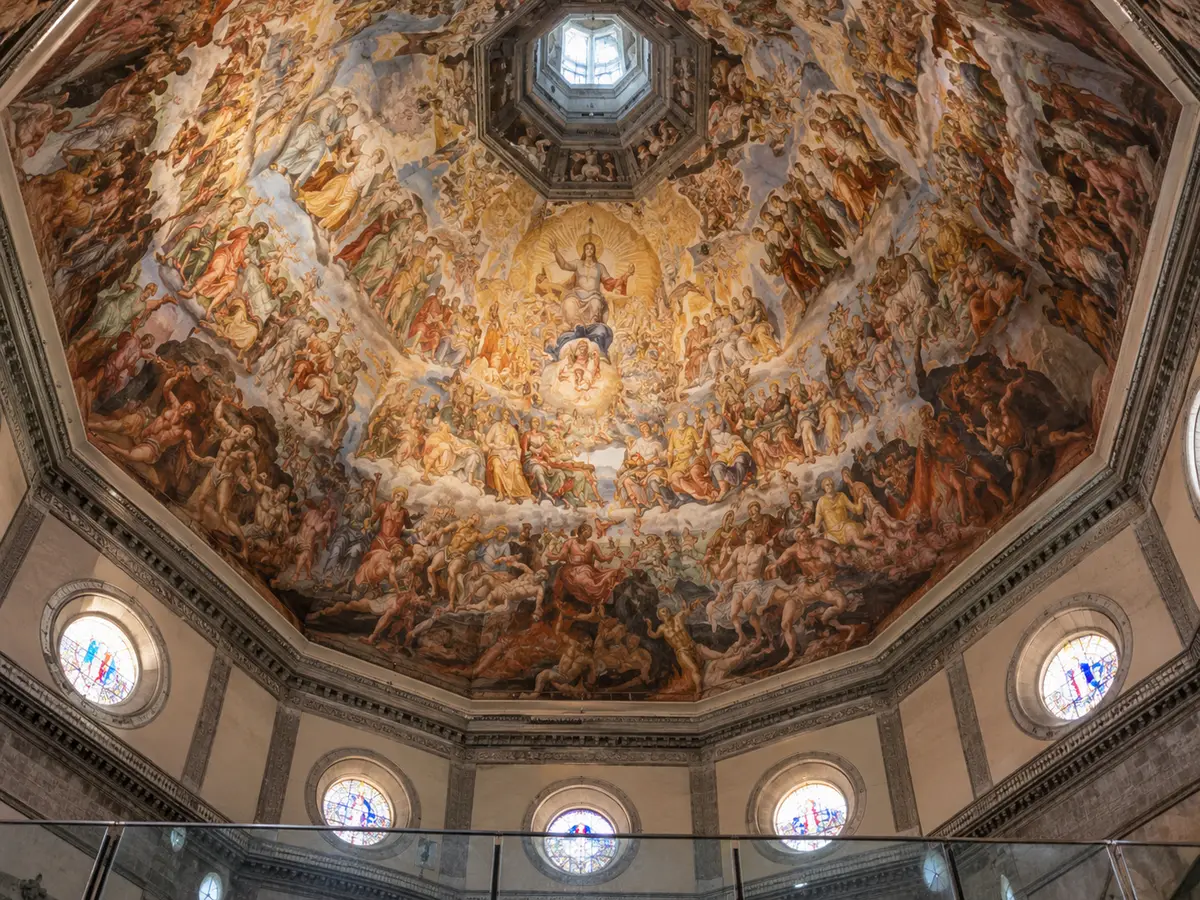
The gallery is the best break on the way. The Last Judgment covers about 3,600 square metres of the inner dome; Giorgio Vasari began it in 1572 and Federico Zuccari finished it in 1579 (Florence Cathedral). From the floor it is a blur of colour. From here you see the faces.
How long does the climb take?
About 45 minutes from the start of your slot, by the Opera's count. The ascent alone takes 20 to 25 minutes at a steady pace.
Most people spend 15 to 20 minutes on top and another 15 to 20 coming down, according to The Better Vacation. With the queue for the ID check and bag scan, set aside 60 to 90 minutes in all. Nobody times you at the top, but the terrace is narrow, so on busy days you shuffle round rather than linger.
Tours take longer because they add a visit first. The dome and museum tour runs 2.5 hours: about an hour in the museum, half an hour in the cathedral, then the climb.
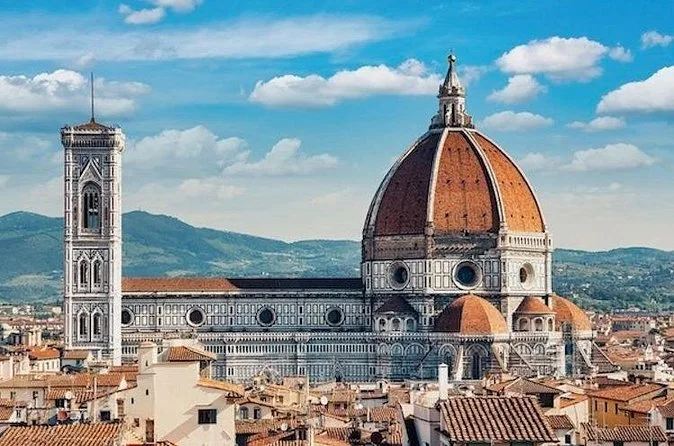
An hour with the Gates of Paradise in the museum, then the climb with your guide: groups of up to 15.
Explore the dome and museum tour Tour detailsHow hard is the climb?
Moderate. Anyone who can climb stairs for 20 minutes with short pauses can do it. Narrow passages and the steep last section are harder than the step count.
The listings ask for moderate fitness and rule out heart problems, back problems and pregnancy. Guests mostly find it hard but doable. One wrote after the museum tour: "Fair warning though it is 463 stairs to the top. Definitely got a great workout in lol." Another, on the small-group tour: "I am 56 years old and relatively unfit and still managed the climb."
Two things catch people out. First, there are no seats on the way up, only landings. Second, the climb seems to end at the gallery, and it doesn't: the steep section is still ahead. In a few places, people going up and coming down share the same stairs and one side waits. Go at your own pace and let faster climbers pass on the landings.
Is the dome climb a bad idea for claustrophobia or fear of heights?
The Opera strongly discourages it for claustrophobia and vertigo, and for heart conditions and pregnancy. The passage between the shells is the tightest part.
Claustrophobia is the bigger problem. Between the shells the stairs are under a metre wide in places and the walls curve in over your head. Once you are in that stretch, turning back means squeezing past the people behind you. If tight spaces bother you, the gallery is your last easy place to decide.
Fear of heights matters at two points: the gallery, where you look 40 metres down to the floor through plexiglass, and the open terrace at the top, which has a railing. Several guests who loved the tour still warn about both. One said it is "possibly not a good idea to climb the dome for people with claustrophobia or fear of heights."
If either describes you, climb Giotto's Bell Tower instead. Its stairs are wider, there are three landings to stop on, and the view has the dome in it.
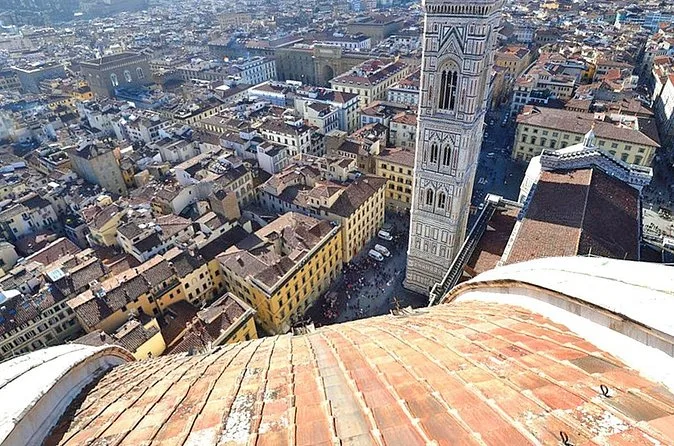
Not sure about the narrow stairs? A guide who climbs with you helps: the VIP climb puts one beside you all the way up.
Check dates for the guided dome climbWhat can you bring, and what should you wear?
No medium or large bags or backpacks. Leave them at the free cloakroom at Piazza Duomo 38/r before your slot. Wear flat shoes with grip.
- Bags: the Opera bans medium and large luggage, backpacks and bags on the climb. The free cloakroom at Piazza Duomo 38/r is open daily 7:30 to 20:15 (official service page). Go there first; it adds a few minutes. The evening tour is stricter still and allows no bags of any size.
- ID: a passport or ID card that matches the name on your pass.
- Shoes: trainers or flat walking shoes. Heels are banned on the terraces, and smooth soles slip on worn stone.
- Clothes: the dress code (covered shoulders and knees, no flip-flops) applies to the cathedral and baptistery, not to the dome climb itself. Most tours visit the cathedral first, so dress for it anyway.
- Phone: in a zipped pocket. You need both hands on the steep part.
Which time slot is best for the climb?
The first weekday slot at 8:15. It is the quietest of the day, the stairs are cool and the light over the city is soft.
The dome runs Monday to Friday 8:15 to 18:45 (last slot), Saturday 8:15 to 16:30, and Sundays and holidays 12:45 to 16:30. The busiest stretch is 10:00 to 14:00, when tour groups fill the stairs. In July and August the passage between the shells holds the heat at midday, which makes a hard climb harder.
The late weekday slots are the other good choice: calmer, and in summer the sun is lower by the time you reach the top. Avoid Sunday if you can. The dome opens only for the afternoon, so the same crowd fits into fewer slots.
An early-morning tour combines both advantages. A guest on the small-group tour wrote: "Book the earliest tour and you'll be inside with no other visitors. Start working out before you come."
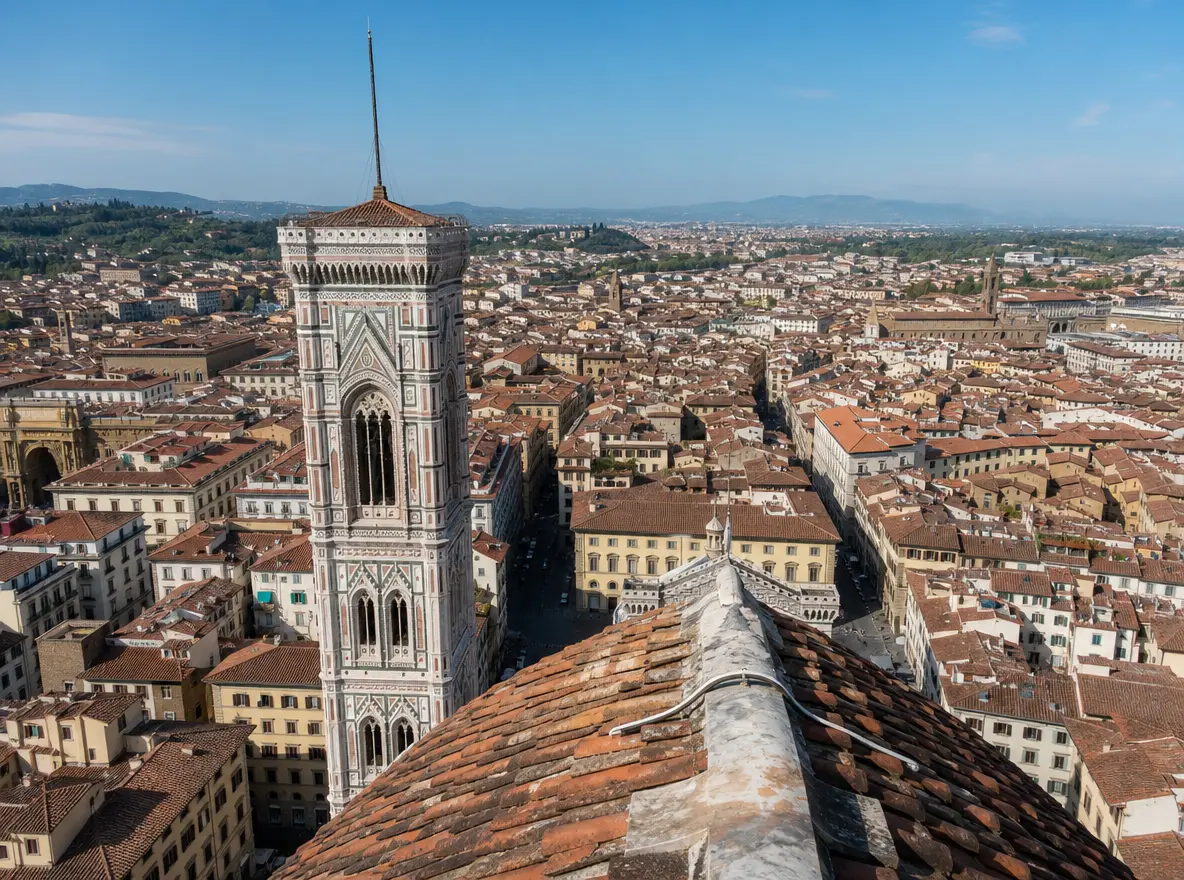
Does anyone guide you on the stairs?
Usually not. The official €50 tour and most Viator tours guide you below, then you climb alone. Three listings are exceptions.
On the official tour you get 30 minutes at the foot of the dome, then climb by yourself. The small-group tour and the dome and terraces tour guide you in the cathedral, then send you up. That is fine for most people; you can't really get lost.
If you want company on the way, pick one of these:
- The dome and museum tour: guests report the guide climbs with the group. "She made sure that no one in the group got lost during the climb and made the experience as seamless as possible."
- The guided dome climb: the listing puts a guide on the climb itself. Its one 5-star guest said the guide "gave us a few stops to catch our breath and provide details". One other guest had to climb without the guide after a scheduling problem and got a partial refund.
- The evening dome tour: you go up after hours with the guide and the cathedral's Key Master.
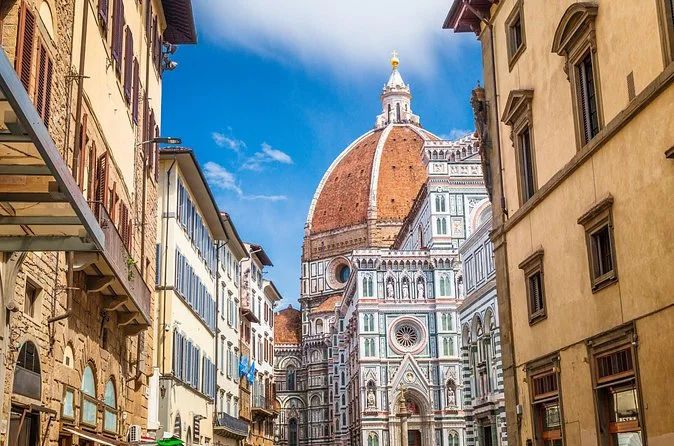
A guide on the stairs beside you for the whole climb, with stops to catch your breath and the story of how the dome was built.
Explore the guided dome climb Tour detailsFrequently asked questions
Is there a lift to the top of Brunelleschi's dome?
No. The only way up is the 463 steps, and the dome is not accessible for wheelchairs or anyone who can't manage steep stairs.
How long should I allow for the dome climb?
About 45 minutes for the visit itself, by the Opera's count, and 60 to 90 minutes including the cloakroom and the queue at the Porta della Mandorla.
Is the climb hot?
The lower stairs stay cool. The passage between the shells holds the heat on summer afternoons, so take an early slot in July and August.
Do I need to dress modestly for the dome?
The dress code applies to the cathedral and baptistery, not the climb. Most tours go through the cathedral first, so cover shoulders and knees anyway.
Ready to book
Choose your climb
Free cancellation up to 24 hours before on every option. Prices are from-prices in USD and move with the season.
Dome Climb with Duomo Museum Tour
- Guided tour of the Opera del Duomo Museum
- Cathedral visit and the dome climb with your guide
- 72-hour pass for the bell tower and baptistery
Brunelleschi's Dome Climb with a Guide
The rare listing where a guide comes up the stairs with you
Duomo Tour with Dome Climb & Terraces
- Guided visit inside the cathedral
- Reserved Brunelleschi's Dome climb (all options)
- Duomo terraces in the Dome & Terraces option